Analyzing Bonus Engagement Trends in Digital Poker Networks and Ties to Safer Play Protocols
Elena Keller · Oct 18, 2026
Analyzing Bonus Engagement Trends in Digital Poker Networks and Ties to Safer Play Protocols
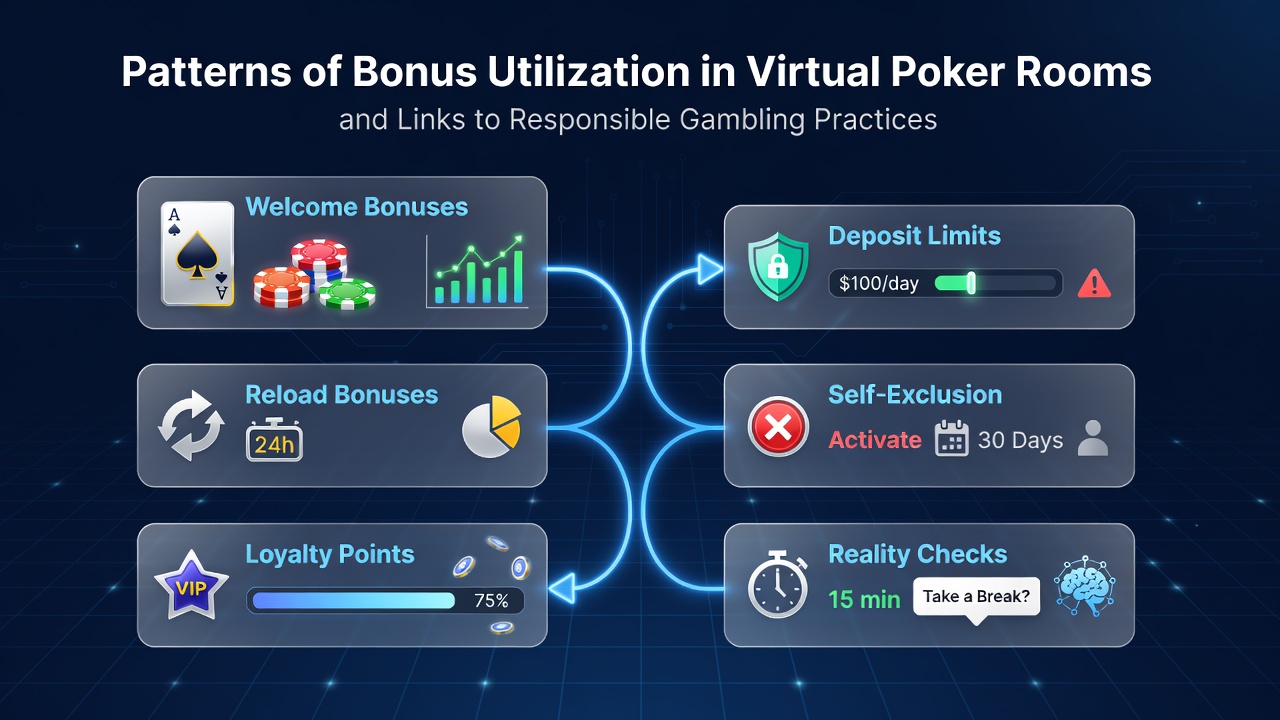
Virtual poker rooms continue to expand their bonus offerings as a core retention tool, and researchers track how players redeem, rollover, and exhaust these incentives across regulated platforms. Data from multiple jurisdictions shows distinct utilization clusters that often align with deposit frequency, game type preference, and self-imposed limits. Observers note that welcome bonuses, reload offers, and loyalty rewards each produce measurable differences in session volume, with reload structures frequently linked to steadier but shorter engagement periods.
Observed Redemption Patterns Across Platforms
Platform operators report that players in regulated markets redeem between 62 and 78 percent of available bonus funds within the first seven days of deposit, according to aggregated transaction logs examined by independent analysts. High-volume cash-game participants tend to favor instant-match bonuses that apply directly to tournament buy-ins, whereas sit-and-go enthusiasts more commonly select free-roll entry rewards. These choices create traceable pathways: one study of session metadata revealed that reload bonuses attached to mid-stakes tables correlate with a 34 percent increase in average hands played per week compared with no-bonus control groups.
Seasonal spikes appear each autumn. In October 2026 several networks introduced time-limited Halloween-themed bonuses that required completion of 15x wagering within 14 days, and early figures indicate higher completion rates among players who already maintained weekly deposit caps. The same cohort showed elevated use of responsible gambling tools such as cool-off periods immediately after bonus exhaustion.
Connections Between Bonus Structures and Limit-Setting Behavior
Regulatory filings from Canadian and Australian jurisdictions demonstrate that players who activate deposit or loss limits before claiming a bonus maintain those limits at higher rates than those who set limits after redemption. One dataset covering 14 months of Ontario iGaming activity found that 41 percent of bonus users who pre-set a monthly loss threshold stayed within that boundary throughout the bonus lifecycle, while only 27 percent of post-redemption limit setters did the same. Researchers attribute the difference to the timing of decision-making rather than bonus size alone.
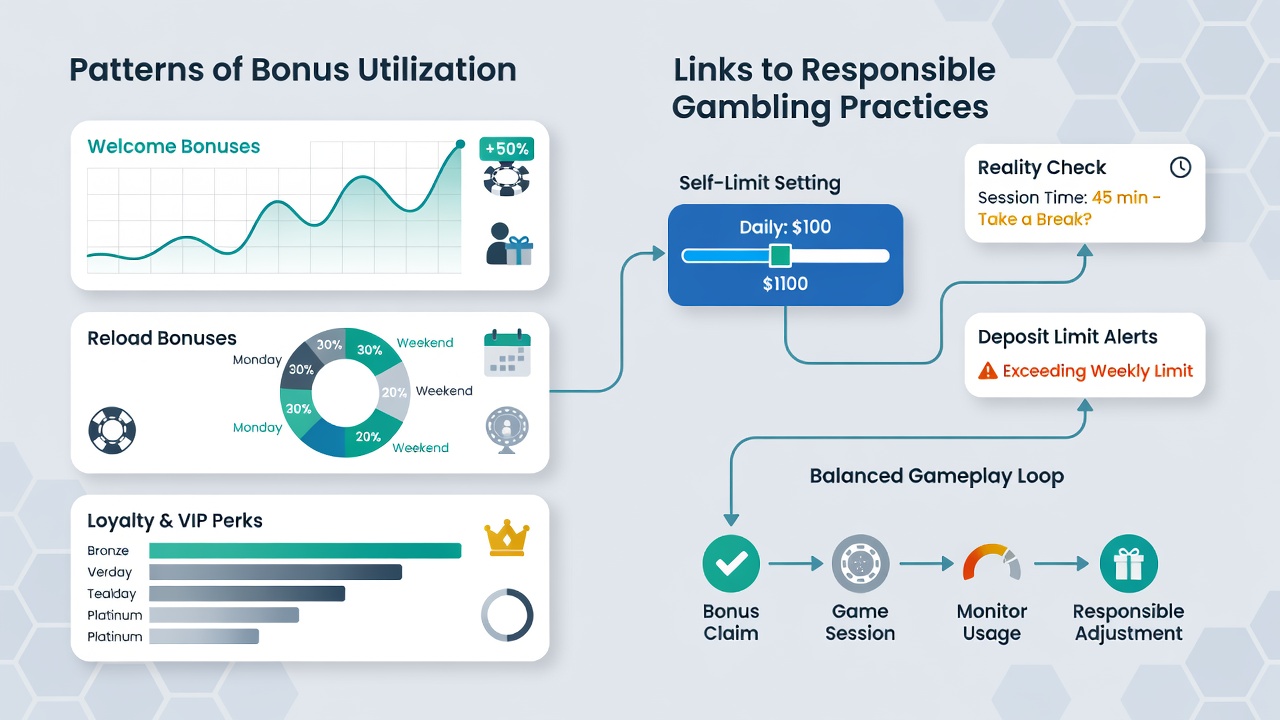
Bonus rollover requirements also interact with time-out functions. When rollover targets exceed 20x, a measurable uptick occurs in voluntary session pauses, particularly among players who track progress through in-app dashboards. European operators participating in the European Gaming and Betting Association transparency initiative documented that 19 percent of users who reached 70 percent of a 25x requirement activated a 24-hour time-out before finishing the remaining wagering.
Regional Regulatory Influences on Bonus Design
State-level rules in the United States and provincial frameworks in Canada increasingly require operators to display bonus terms alongside responsible gambling prompts at the point of claim. In jurisdictions that adopted this display standard during 2025, average bonus-related disputes fell by 12 percent, according to compliance reports submitted to the New Jersey Division of Gaming Enforcement. Similar requirements took effect in parts of Australia in early 2026, prompting several networks to adjust maximum stake restrictions during bonus play to align with harm-minimization guidelines.
These regulatory shifts have produced observable changes in bonus architecture. Networks now segment offers by player risk profile more frequently, offering lower wagering multipliers to accounts that have previously used reality-check features. Analysts tracking these segmented campaigns note that completion rates remain stable while the incidence of rapid deposit escalation after bonus clearance declines.
Conclusion
Patterns of bonus utilization in virtual poker rooms continue to evolve alongside responsible gambling infrastructure. Transaction data and regulatory submissions indicate that the timing of limit setting, the structure of rollover targets, and the placement of safety prompts at claim points each shape how players interact with incentives. As platforms refine these mechanics through 2026, ongoing monitoring by oversight bodies supplies the clearest record of whether revised bonus designs support or hinder established safer-play protocols.